


In an era marked by demographic change, acute labor shortages, and rising levels of workplace stress, employee health is no longer merely a matter of well-being. It is a key factor in business success.
Workplace Health Management (WHM) seeks to address this challenge through a variety of measures. However, traditional approaches—such as subsidies for gym memberships, flexible work schedules, or healthier food in the cafeteria—fall short, as they cannot truly improve the physical and mental health of employees or, more importantly, ensure adequate medical care in the event of illness. In our blog post, we show how supplemental health insurance through the employer (bKV) can permanently close this gap.
1. Challenges of a Changing Workplace
Business and HR leaders are facing growing challenges:
- Demographic Change: Workforces in nearly all industries and companies are aging. While older employees are experienced, statistics show that they tend to have longer periods of absence due to illness. Preventive healthcare is already an indispensable factor for success in any organization!
- Skills Shortages and High Turnover: The shortage of skilled workers is one of the biggest challenges facing the German economy. Many industries are facing a critical shortage of workers, which is hindering growth and placing a strain on businesses. At the same time, employees’ willingness to change jobs is currently higher than ever before: Over 60% of workers in Germany occasionally consider looking for a new job. By comparison, in 2017, only 18% were considering a job change. (Source: German Economic Institute, 2026)
- Rising absenteeism – declining employee motivation: Rising absenteeism and declining motivation are top priorities for many HR managers. (Source: HR Report, 2026). The causes of this are complex: on the one hand, they stem from increasing physical and mental workloads. On the other hand, however, a poor work environment also leads to a loss of employee motivation and retention.
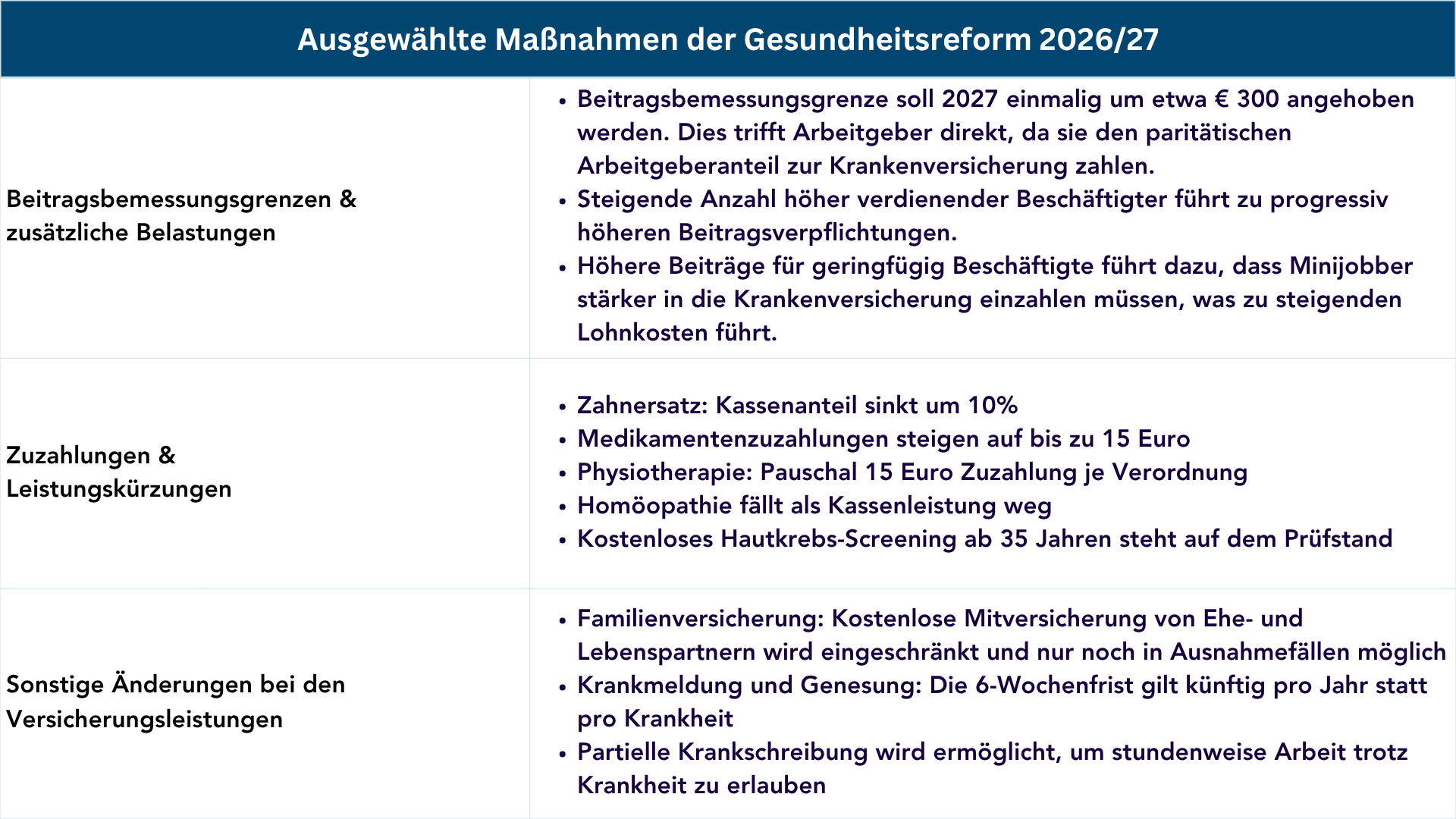
Taken together, these challenges pose significant economic and organizational hurdles for every company. And that’s not all: the upcoming healthcare reform is putting even more pressure on workplace health management. This is because those with public health insurance face further cuts to benefits, while employers face rising labor costs. In the table below, we have listed the key measures of the healthcare reform.
2. Objectives and Limitations of Workplace Health Management (WHM)
The goal of workplace health management is to create working conditions that promote good health and to encourage health-conscious behavior.
To achieve these important goals, workplace health management is based on three key pillars: 1. occupational safety and 2. integration management are required by law. The third pillar—workplace health promotion—is voluntary.
And this is precisely where traditional workplace health management systems are increasingly coming up against invisible—or rarely considered—limitations. The following structural weaknesses should be taken into account:
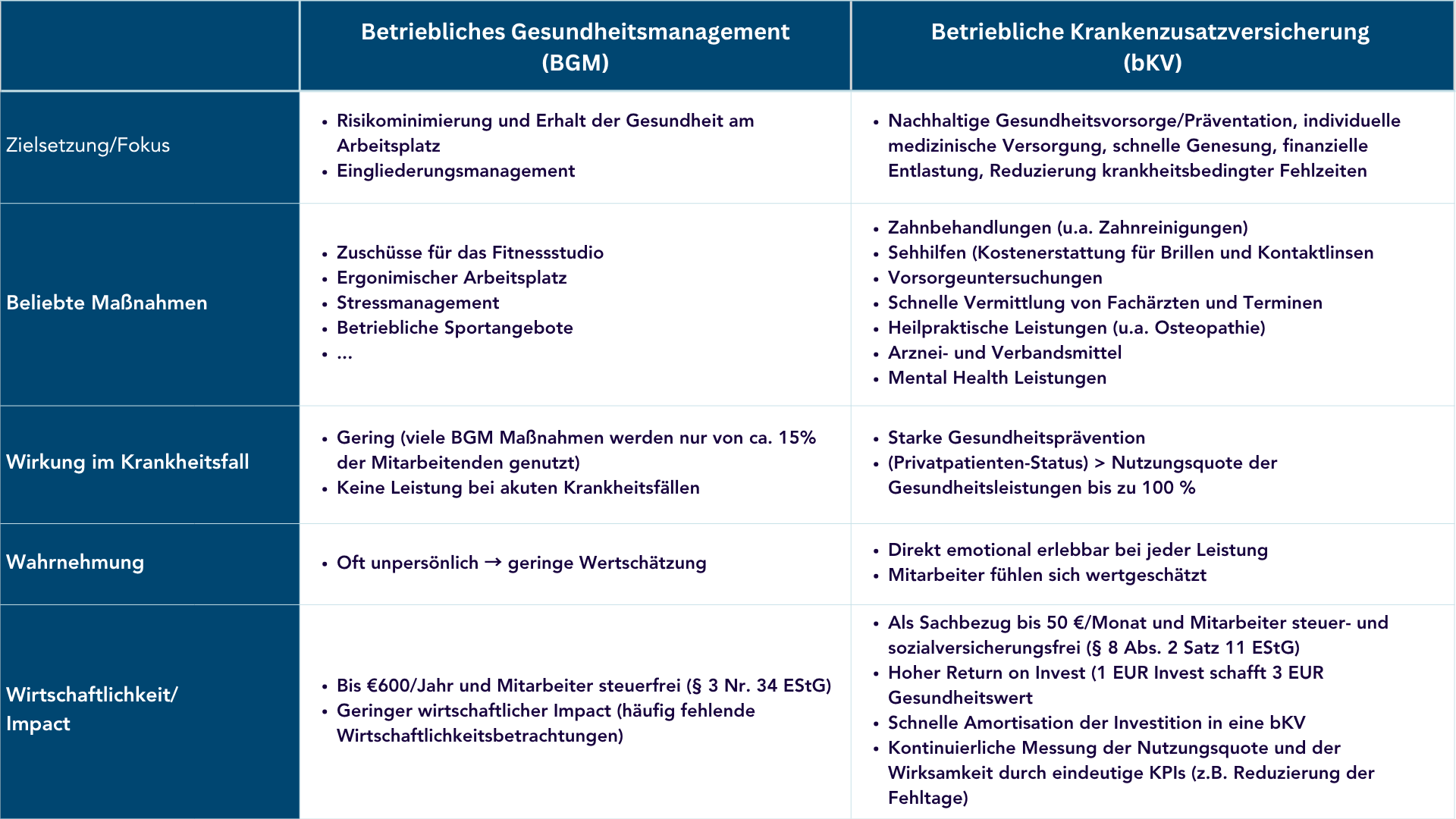
- Low uptake: Programs such as back training, nutritional counseling, or gym credits typically reach only those employees who are already physically active and health-conscious. The actual at-risk groups within companies are rarely reached. And often, only 10 to 15% of the workforce takes advantage of such initiatives.
- No help in case of acute illness: Prevention can prevent or delay illness. However, if an employee suddenly falls ill and needs to see a specialist quickly, even the best gym membership won’t help. What’s missing are medical services that take effect immediately and are easily accessible to employees.
- Lack of tangibility: Many workplace wellness initiatives fizzle out in everyday life. They are seen as "nice-to-haves," but rarely generate a deep sense of genuine appreciation.
- Lack of Needs Assessment and Cost-Effectiveness: Traditional workplace health management initiatives often resemble a colorful “bouquet of flowers.” Measures are offered without understanding the specific needs of employees or regularly assessing their economic benefits. Such an approach often results in a waste of money.
How can these structural weaknesses be overcome? What measures are appropriate for promoting workplace health in the long term?
3. Why company-sponsored supplemental health insurance (bKV) is the final piece of the puzzle for workplace health management:
“As one of the most effective components of workplace health management, supplementary health insurance transforms workplace health management from a mere compliance requirement into a strategic and economic tool. When planned and implemented to meet specific needs, supplementary health insurance permanently boosts employee motivation and reduces absenteeism by up to 25%. At the same time, it strengthens the employer’s position in the labor market in the competition for skilled workers and talent. (Tim Bütecke, Founder and Managing Director of FAKTOR MENSCH)
In the past, people with public health insurance in Germany have repeatedly had to accept cuts to their benefits as a result of healthcare reforms. And even though the upcoming healthcare reform has not yet been passed, one thing is certain: it will become more expensive for those with public health insurance and for employers, while benefits will be reduced, as explained above.
However, with a health plan tailored to the needs of all employees—based on a wide range of supplementary health insurance benefits and plans—upcoming benefit cuts can not only be offset, but the structural gaps in workplace health management can also be effectively closed. This is because supplementary health insurance gives employees access to private patient benefits without requiring a health examination or waiting periods—an invaluable advantage, especially for older employees or those with pre-existing conditions. The entire workforce benefits from these supplementary health insurance benefits—from trainees to executive management.
It should be well known by now that investing in the health of your employees pays off many times over. The key benefits of supplementary health insurance are outlined below:
Economic benefits:
- Health promotion reduces absenteeism: Studies show that, on average, every employee in Germany takes nearly 23 sick days per year—and the trend is rising. A supplementary health insurance plan (bKV) as the foundation of a corporate health management program (BGM) reduces absenteeism by an average of 20 to 25% (FAKTOR MENSCH, 2026).
- Faster recovery (reduced time off work): When employees have to wait a long time for a specialist appointment, it drastically increases the amount of time they are off work. Modern supplemental health insurance plans include a specialist appointment service that ensures those with acute illnesses can receive specialist care within a few days. Access to advanced diagnostics and treatment also leads to a faster recovery.
- Minimizing presenteeism: The financial cost of "presenteeism"—that is, employees who come to work despite being sick and are consequently more prone to errors and less productive—is often twice as high as that of actual absences. The bKV helps reduce these hidden costs in the long term.
- Tax benefits: Under certain conditions, contributions to the supplementary health insurance plan (bKV) can be paid entirely by the employer and are exempt from both income tax and social security contributions up to the non-cash benefit exemption limit (currently EUR 50 per month per employee). This makes the bKV one of the most cost-effective salary components available (see also §8(2), sentence 11 of the Income Tax Act).
- A 100% utilization rate creates tangible added value: Unlike traditional workplace wellness programs—such as gym memberships—nearly every employee takes advantage of the benefits offered by a customized supplementary health insurance plan. Whether it’s professional teeth cleaning, new vision aids (glasses/contact lenses), copayments for medications and medical treatments, or preventive checkups: employees experience these benefits directly in their daily lives. Every time an employee takes advantage of a health-promoting benefit, the employer’s appreciation is immediately felt, which sustainably supports employee motivation and performance.
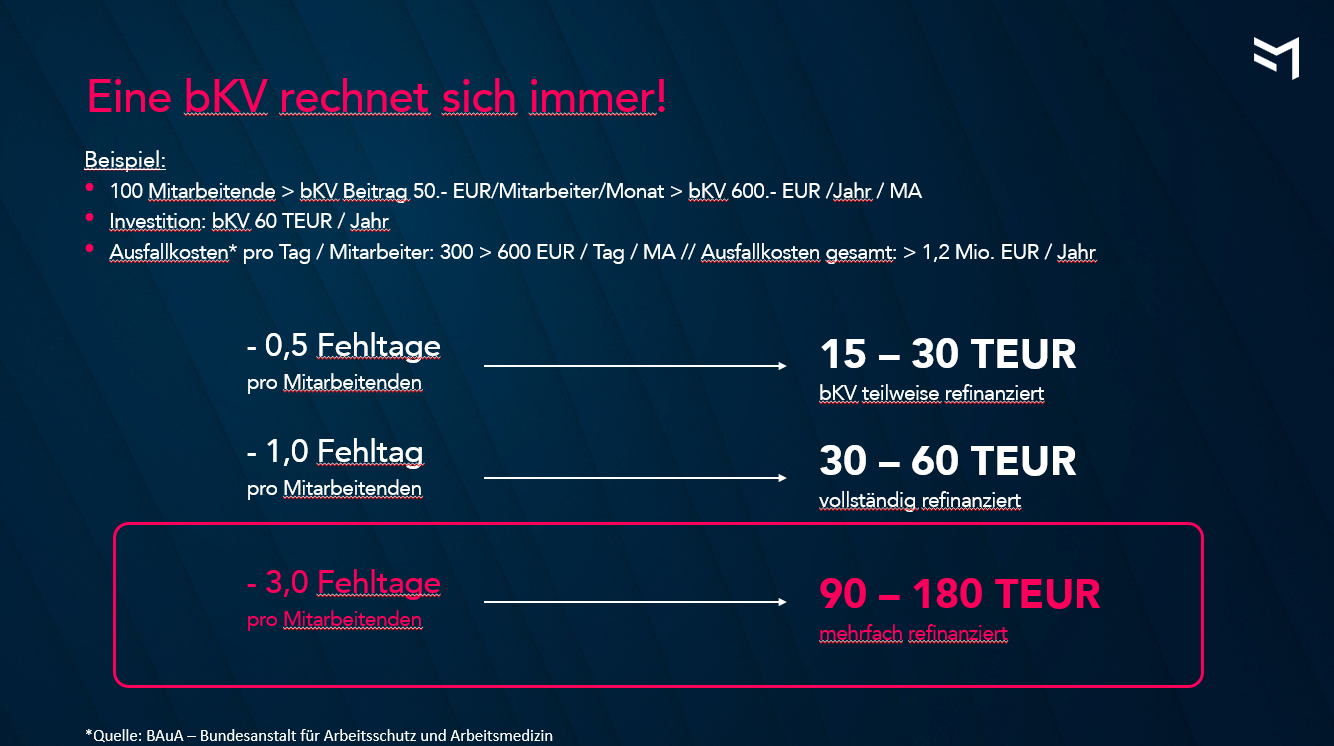
- Return on Investment (ROI): Our experience shows that reducing the number of sick days per employee by just 0.5 days per year is enough for the supplementary health insurance plan to start paying for itself. The sample calculation below illustrates the high cost-effectiveness of this approach. And this calculation does not even take into account the costs associated with employee turnover and declining employee motivation.
Cultural and strategic opportunities for success
- Employer Appeal: The workplace health management approach outlined here positions the company as a caring and modern employer! At the same time, it strengthens the company’s position and appeal in the job market.
- Employee retention: Showing appreciation for employees has been proven to increase their sense of identification with the company and boost the motivation of the entire workforce. This, in turn, leads to a noticeable and lasting reduction in the turnover rate.
- Improved workplace atmosphere: Focusing on well-being and health reduces stress and strengthens team cohesion over the long term.
Given these benefits, the questions that business owners and HR managers need to ask themselves are: What are the actual costs of employee absences in my company? How high are the real costs of employee turnover and recruitment? And what return on investment could my company achieve with a customized supplementary health insurance plan? These aren’t complicated questions—but they represent significant potential that’s easy to unlock!
Our experience shows that combining traditional workplace health management measures with proactive preventive care and private medical care in the event of illness can create a sustainable and effective workplace health system within a company.
Conclusion: Supplementary health insurance as an indispensable factor in the success of workplace health management
Given the challenges and opportunities outlined above regarding needs-based workplace health management, investing in people as a key success factor is becoming increasingly urgent. A modern workplace health management program is therefore an indispensable tool for sustainable success in corporate and human resources development.
But it is only through supplemental health insurance (bKV) that a company’s health management program becomes comprehensive, credible, and highly efficient. It proactively supports preventive health care and medical treatment for all employees. For companies that have implemented bKV, it has long since ceased to be an optional “add-on” and has instead become the emotional and economic foundation of a highly effective corporate health management program.
Start consistently promoting "workplace wellness" in your company today! We would be happy to support you in this endeavor.
*As a full-service provider specializing in workplace health management and supplementary health insurance, FAKTOR MENSCH supports FAKTOR MENSCH clients from the initial consultation through to successful implementation and ongoing support. For 26 years now—based in Hamburg, serving all of Germany. Please feel free to contact us.
Ready to make a real difference?
We look forward to getting to know you and your company in person. Once you fill out the form, we'll get back to you right away.